The Residues of Death
“No me espera nadie en ningún sitio, y eso es lo que ha sucedido en mi vida: debo aprender a caminar por las calles, por las ciudades, por donde me toque, sabiendo que no me espera nadie al final del viaje. Nadie se preocupará de si llego o no. Entonces se camina de otra forma.”
“No one is waiting for me anywhere, and that is what has happened in my life: I must learn to walk through streets, through cities, wherever I may be, knowing that no one is waiting for me at the end of the journey. No one will worry about whether I arrive or not. So one walks in a different way.”
Manual Vilas, Ordesa
18.3.2026
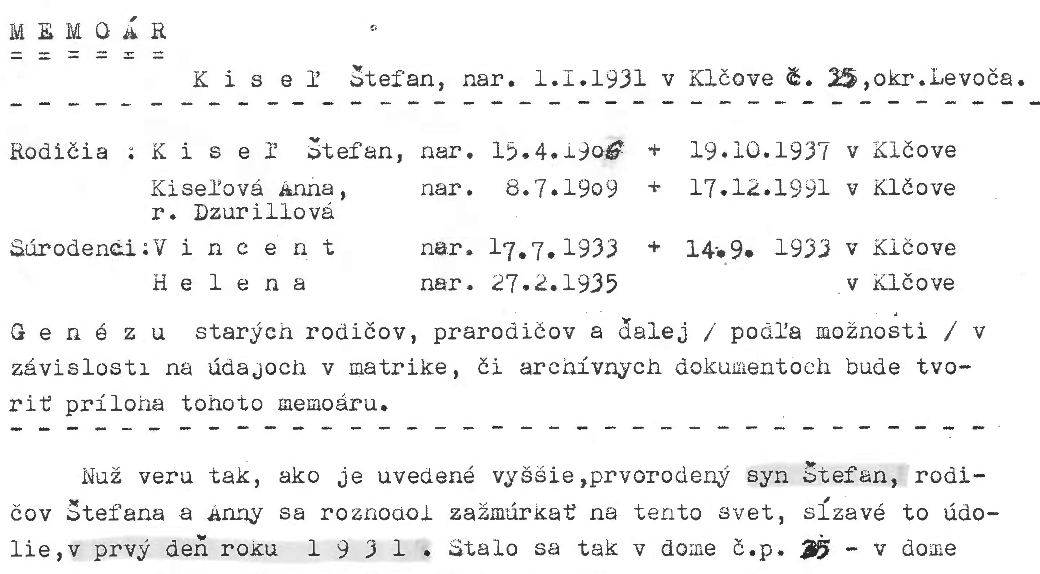
Ashamed to admit it, I never pushed myself to read his memoirs while he was alive. Short-sighted as we are, we assume the status quo will endure forever, and I kept postponing the moment to open the manuscript—until it was too late. Returning to my hometown before his funeral, I finally set everything aside and took the immaculate, typewritten pages into my hands. Three hundred pages, meticulously composed, recording every facet of life: a thorough chronicle of his major experiences, reflections on local traditions and material life, and intimate remarks on love, family, and work. It is the account of someone who never ceased to observe life with diligence and awe.
It would be naïve to expect an untroubled life story from an eyewitness to the 20th century. The first sentence of my grandad’s memoir already foreshadows the tragedies he had to endure: “…the first-born, Stephen, son of father Stephen and mother Anna, decided to open his eyes and look upon this world—a valley of sadness—on the first day of the year 1931.” And a valley of sadness it was.
When he was six, his father succumbed to pneumonia, leaving behind a widow and two young children. From an early age, he had to help his mother with agricultural and domestic work to keep the family afloat. Throughout his childhood, he endured severe poverty and was often forced to skip school and forgo time with friends in order to attend to his duties at home. By the time he turned fourteen, the village community had already marked his passage into manhood, bestowing upon him the title of “parobek,” reserved for grown men.
This was just at the end of the Second World War, in 1945. Fortunately, northern Slovakia escaped major material devastation from the waning German occupation, partisan fighting, and the advance of the Soviet Army. In contrast to the turmoil that engulfed much of the region, the war’s end arrived with a certain uneasy quiet. In its aftermath, he resolved to become a priest and enrolled in a Roman Catholic seminary in Moravia. His mother supported him, encouraged both by the improving economic situation of the family and by the prestige of having a son become a priest.
However, this decision quickly turned against him. The newly installed Communist government abruptly closed all clerical institutions and incarcerated students and teachers in what came to be known as the “Night of St. Bartholomew.” The entire Roman Catholic monastic community was dispersed across various prisons in Czechoslovakia, with my grandfather ending up in an old gymnasium hastily repurposed as a jail in Bohosudov. There, his health rapidly deteriorated, and he suddenly lost half of his visual field in one eye—a condition known as hemianopia. He was eventually taken to a hospital and, fortunately, released into home care. He returned not as a young priest in a dignified cassock, but as a broken figure: clad in tattered clothes, burdened with permanent damage to his sight, and marked by a criminal record that would shadow him for the rest of his days.
He did not waver, however, and quickly accepted what was offered by the regime—a position as a forest ranger. He remained in this profession until his retirement, overseeing forest administration across many regions of northern and eastern Slovakia. He took immense pride in his work and his calling. The family apartment bore testament to his devotion, adorned with stuffed animals he had carefully collected, and he continued to wear his uniform long after his official retirement.
This is how I remember him most vividly: a disciplined, exacting grandfather who allowed little time for play, yet sought to instill in his grandchildren the values of diligence and responsibility. It would be unwise to judge him otherwise. This was the way he understood life—as a series of sacrifices imposed by circumstance: to give up one’s childhood to help an impoverished family, or to risk one’s health in enduring the adversities fate had laid before him.
With increasing age, the radius of my grandparents’ movements gradually receded. Weekly visits to their garden allotment outside the city became less frequent, independent shopping excursions turned into dependence on others, and cooking for themselves was replaced by food deliveries. Their worlds slowly narrowed, and they began preparing for the inevitable. Their small flat and close family were the last nodes that held them in this world. The Bible and prayer brought them closer to the other one.
As he grew older, my grandfather passed the baton of responsibility to his son, my father. He, together with my aunts, became that necessary, final connection to the outside world that was slowly leaving them behind. They did the daily shopping, arranged lunch and dinner deliveries, and drove them to whatever hospital visits were required. In the final stages, the roles of carer and cared-for reversed entirely. Daily help became essential for their survival: helping them change clothes, assisting with showering, and attending to their basic needs. Distressing as the sight of one’s dying parents is, they did not budge. They were there for them, in one form or another, until their last breath.
My grandmother passed away on August 17th, 2025. My grandfather decided to leave us behind in this sad valley of life six months later.
Some deaths show us what does it mean to sacrifice something.
24.6.2024
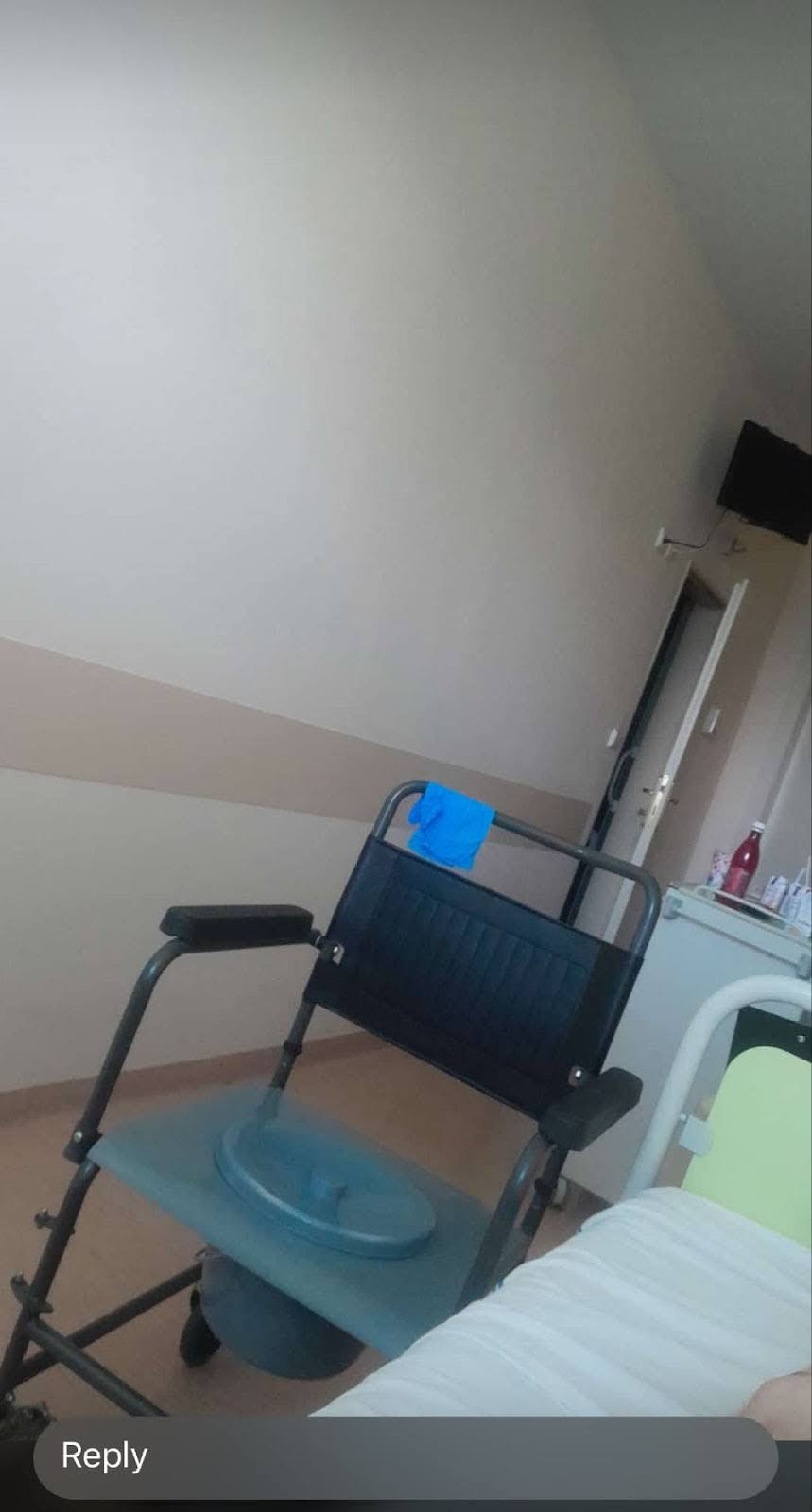
It’s a minimalistic, clinical photo. In the center, there is a hospital wheelchair with a stool bucket underneath. A blue glove lies still on the wheelchair; in the background, there is a small TV attached to the wall and a table, along with a partially cropped hospital bed. The only sign of human presence is a tiny part of a left knee encroaching from the bottom right. The author, my uncle, took it while lying on a hospital bed in an oncology clinic and posted it as a status on his WhatsApp page at 5:51 a.m. CET on June 23rd, 2024.
I noticed the post after I woke up but didn’t give it much thought. However, half a day later, my dad called me and delivered the blow—my uncle had just passed away. Heartbroken, I suddenly recalled the morning post. I opened WhatsApp and navigated to the status page again—a photo taken by him, with an empty chair in the middle of a hospital room. I couldn’t stop myself from attempting to decipher the meaning behind it. Knowing the inevitable that was about to come, was it perhaps a unique way of saying goodbye? An empty chair left behind.
Nobody in my family actually believes this theory of mine. They think the snapshot and its posting were just accidental presses of buttons while my uncle was using his phone. Knowing well who my uncle was—an artist, a man of ideas, someone who regularly burst with flashes of inspiration—I remain certain in my conviction that he would not leave this world without a final act of creativity.
It’s impossible to understand who my uncle was without appreciating his unyielding passion for cities.
As an architect, cities were his primary material. He moulded public spaces through all types of interventions, from minor artistic installations, to more mundane residential houses and blocks of flats, to large-scale projects of regional importance. A textbook enumeration of a selection of his work would include a water fountain installation, two residential buildings for which he won a national architecture prize, a main hockey stadium, and a Technical University library, among many others. It is impossible not to bump into realizations of his visions when walking in his hometown. These, however, are still just a tiny fraction of the visions he had for the future of the town. His family house was inundated with sketches—some more raw, some more concrete—depicting the shapes of Atlantis he was fantasizing about.
As a university teacher, cities were the main subject of his research. They were not abstract systems to be dissected from a distance, but living organisms he invited others to observe with the same attentiveness he practiced himself. In lecture halls and studios, he guided students through the layered realities of urban life—consulting their projects, challenging their assumptions, and patiently supervising theses. His desk was always buried under books and journals, many of them marked with notes for reviews he was preparing on contemporary architectural thought in Slovakia and Czechia. Yet his curiosity stretched far beyond the region. Our conversations would drift effortlessly from local housing typologies to distant icons. After I moved to London, we would often find ourselves dissecting the impact of major buildings in London on the daily lives of its inhabitans, be it Barbican, Southbank, or Laban Dance Center.
As a citizen, cities were a source of his everyday activity. He was an avid urban cyclist and a fervent believer in the concept of urban micromobility. He was one of the principal consultants and visionaries behind the European Capital of Culture (ECC) project realized in the city in 2013. ECC, a yearly title awarded to cities by the European Union, introduced several important landmarks that to this day represent hubs of cultural life in the city. His leisure time, the little he had, was spent reading about cities. I could rarely contain my excitement when visiting their family flat, as I knew he would hand me a stack of books he had just finished reading—from theoretical studies on architecture, to investigations in urban design, to fiction exploring the relationship between humans and cities. On my fifteenth birthday, he gifted me Invisible Cities, a book that, under the guise of a fantastic story imitating medieval travel diaries, becomes one of the most authentic love letters to cities in literature. I have not stopped carrying this book to this day—as a reminder of my own love for cities, and as a memory of my uncle.
The unrelenting speed of his creativity was called into question once the doctors confirmed the cancer diagnosis. He accepted it with a stoic peace of mind; he did not budge. He perceived the subsequent intrusion of treatments as a minor obstacle, something that would pass, and continued creating as before. He went on feverishly attending to his responsibilities at work, and he never gave up on his commitments at the university, from consulting with students to teaching. The decline of his body, becoming unnervingly obvious to us, was a nuisance his mind brushed away.
Even in the final stages of the disease, when the metastasis had already spread throughout his body, he was taking boxes of work papers and bound theses of students to the hospital. The spectre of death did not crack the intensity of his dedication.
Unwillingly, he left an empty chair in this world on June 24th, 2024. He was born, he lived, died, and is buried in Košice, the city he admired and shaped with the clenching awe of a newborn.
Some deaths show us how to keep dreaming forever.
30.8.2016
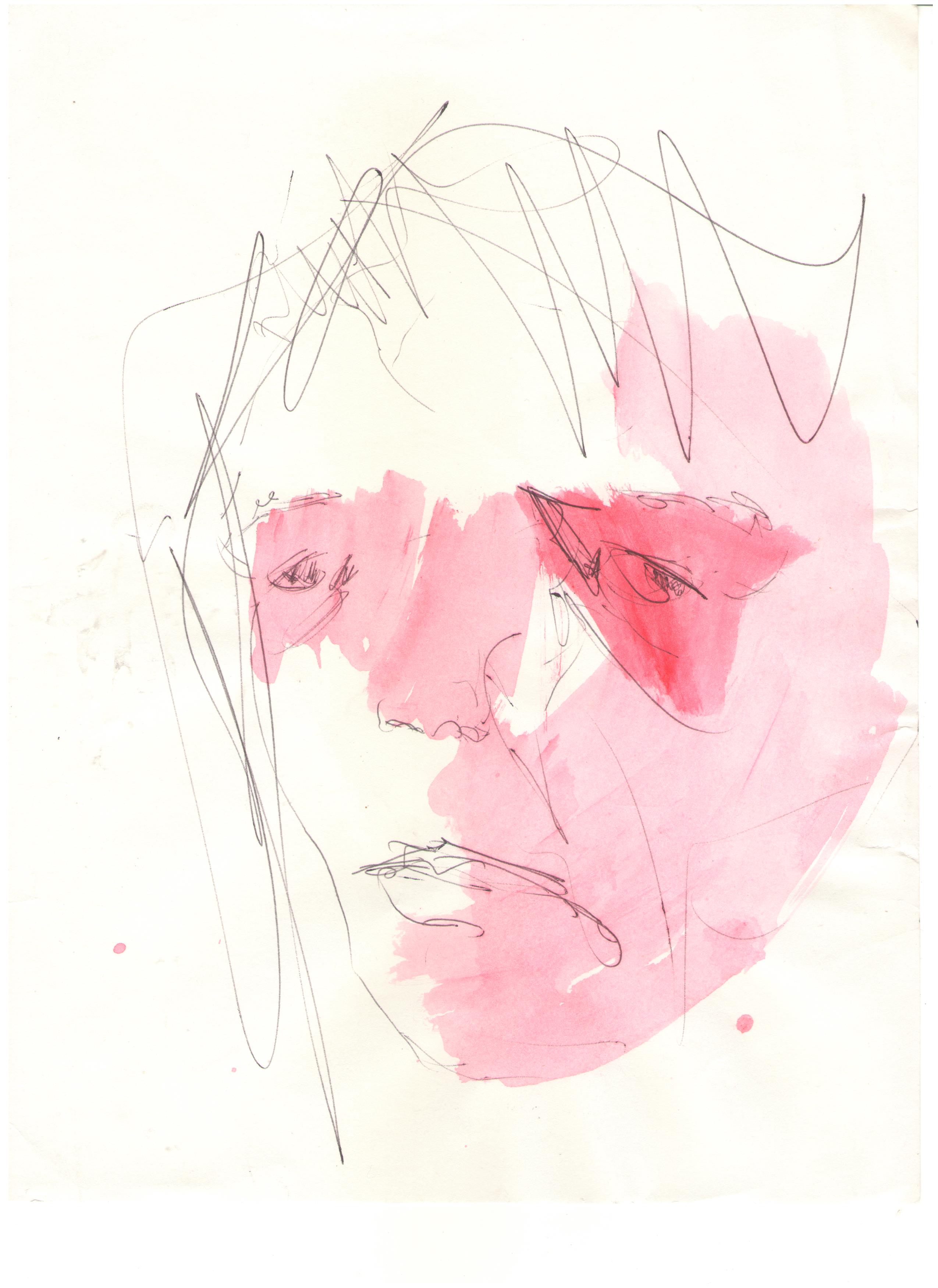
I am always startled by that piercing look when I see your drawing in my parents’ house. Unbeknownst to myself why, I keep the drawing lying on the table in my childhood bedroom, as if forcing myself to question my presence there. There is no signature, no mark of place, no date to aid me in tracing its origin to a particular moment in time. Retrospectively, I question my innocence, almost my naivety, when looking at it. It is a brisk sketch, lines fiercely tracing the outline of a face that looks into nothingness with a despair. The deformed contours resemble the portraits of Egon Schiele, the young Austrian painter whom you admired. Confronting that bleak expression overlooking my room, I never stop pondering whether I could have foreseen that something was wrong. Could I have avoided your suicide? Could anyone? I suppose these questions are inevitable. And even worse, they are destined to remain unanswered.
It felt as if the world belonged to us back then. Young artists and philosophers wandering through it, waging a slightly confused war against the system. I was studying history and political science at university, and you were attending an art school course in printing and drawing. I was writing poems and essays, and you were producing prints, drawing everything around you. In our close group of young rebels, we would extol the virtues of the night, drinking until dawn and discussing everything—from the sublime violence in Caravaggio’s Judith Beheading Holofernes to Michel Foucault’s heterodox theories on the intersection of knowledge production and power structures.
Carrying Kerouac’s On the Road and de Guevara’s The Motorcycle Diaries, we travelled through the mountains of eastern Slovakia. We fell asleep on benches at a local bus stop, sunken in wine after long evenings in the vineyards of Tokaj. We cycled arrogantly through the streets of Milan at night, screaming the lyrics of Bella Ciao. We felt like Nietzsche’s Übermensch, floating through the world, respecting only our own rules.
As we were growing older, that arrogance started subsiding. You moved to London for work, to earn and save some money, and I moved to Prague to finish my studies. Even though seeing each other was getting harder and harder, our email chains and Facebook messages kept substituting for that diminishing contact. I was planning to visit you in London, and you still kept coming back for whatever your finances allowed.
It was maybe the pressure of keeping up with my university tasks, maybe the force of male ignorance and insensitivity that prevented me from really getting to know your struggles in London. Satisfied by the apparent monotony of the world, I never even entertained that possibility. I think no one did. That is why your flatmate’s phone call on that late Tuesday evening erupted into our lives with such a shattering force.
I started sensing a tragedy when he posted a message on your Facebook wall to contact him immediately. I did, ignorant of the drama that would ensue. His voice, stuttering, described the timeline of the suicide, the ensuing police involvement, and a request to share that information with your closest relatives. Trembling and in a state of despair, I hastened to leave my suffocating apartment and found refuge in my sister’s flat a few blocks nearby. Having to suppress the shock, I took on a task that had been bestowed upon me. I picked up the phone and called your sister, your family, and our closest friends. There was no time to mourn.
The funeral that ensued was a celebration of your spirit. Hundreds of people showed up—your family, your classmates, and everyone from our old group of romantic rebels. King Crimson’s Epitaph resonated through the brutalist funeral hall, shaking the large glass windows overlooking a serene pine forest. We followed the mass with a wake, as unorthodox as you were—and crying, drinking, and buoyant remembering of your journey blended together until dawn.
Funeral is a break in the normal functioning of life. Time freezes, and the entire community flocks together, leaving all other considerations aside, to commemorate. However, that pause can only be short-lived. The necessities of life enforce the dissolution of this unique congregation. People disperse again like seeds carried across cities, states, and continents, quietly sweeping aside the memories that keep breaking through the forts built by the everyday.
I didn’t resist and moved on like everyone else. For work reasons, I followed your path and relocated to London in 2021. I now roam the city that welcomed you ten years ago. But that is all the information I have—that you once lived here. I never knew where you worked, what your favorite pub was, or where your art studio was (did you even have one?). And now, crossing this magnificent city I call home, our youthful rebellion keeps living. We head to a chicken shop after a boozy night out, I proudly watch you open your first art exhibition, and we chat about post-structuralist interpretations of cinema as we watch the sunset from Primrose Hill. These moments are harder to brush aside precisely because they never happened. It is the doors of the never-experienced, left ajar, that we miss the most.
Some deaths show us how futile it is to try to forget.
End
Death is utterly unintelligible. Whether it is a sudden disappearance or a gradual disentangling of life, the loss of a face, of words, and of the touch of another human being is a radical rupture in reality. We find ourselves bickering with the shadows of our relatives, or walking with the dreams of our friends long after their hearts have beaten for the last time. Our bodies and minds preserve what, until only a few minutes, hours, or days ago, was considered close and familiar. Doing anything else inevitably unleashes that sign of seemingly irreversible disorientation: crying. Crying is not only a purely physiological reaction to stress; it’s the ultimate expression of resignation at understanding.
Death is there to show us how incomprehensible it is to walk alone.